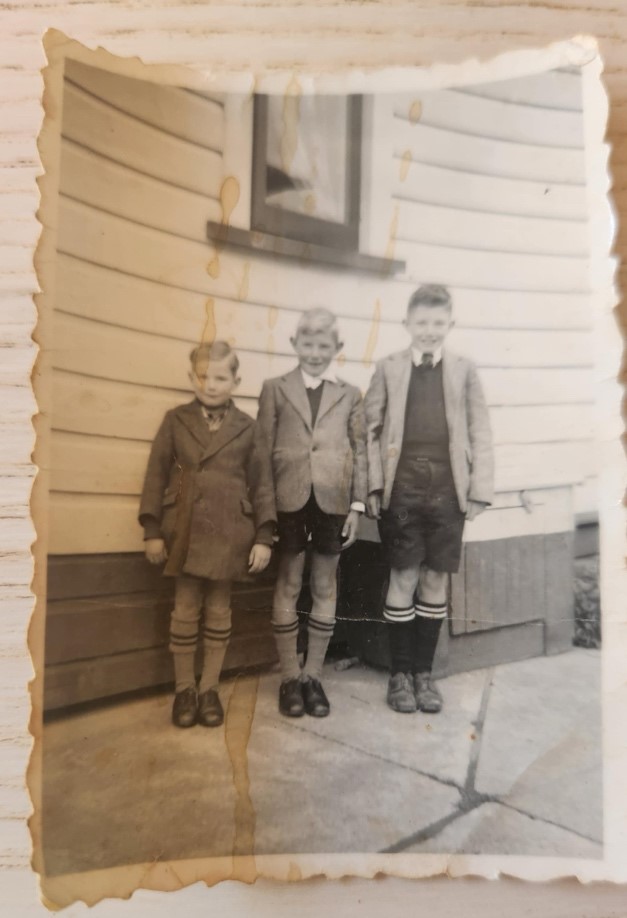
On Christmas morning, 1953, my then 19-year-old father breezed into his Great Aunty Ida’s house in Palmerston North and wished her a cherry Merry Christmas. She told him not to be a fool, and that his Aunt, Uncle and three young cousins had been killed in the Tangiwai train disaster that had claimed the lives of 151 people.
Like most people on that fated journey, the family were traveling to be with loved ones for Christmas. In the aftermath of the disaster wrapped gifts were dredged up from the muddy water along with the bodies of those recovered.
The accident occurred at 10:21pm. Shortly afterwards. soldiers from Waiouru Army Camp, radio operators from Irirangi Naval Communications Station and workmen from the Waiouru Ministry of Works (MOW) camp were searching for survivors. By 4am Christmas Day, the first of the deceased began arriving at the temporary mortuary at Waiouru Camp. The Prime Minister Sydney Holland gave an address to the nation on Christmas Day, broadcast over the wireless.[1]
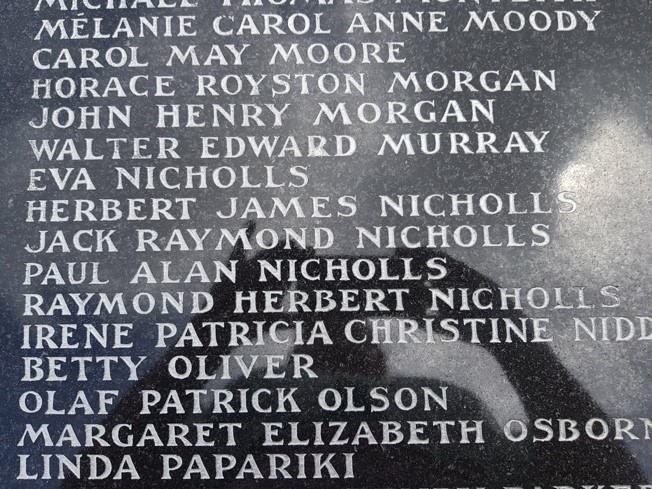
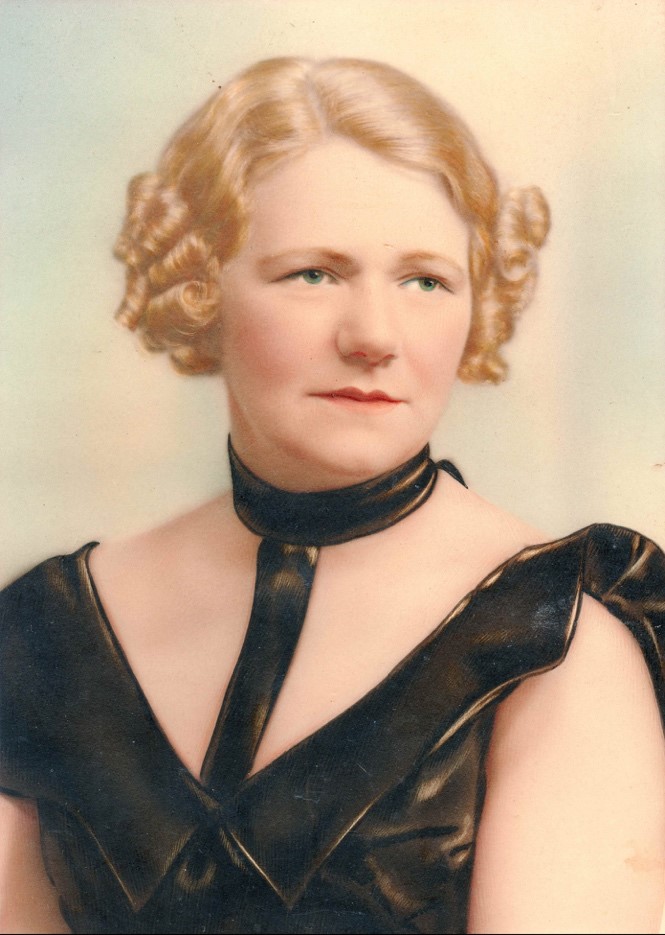
Raymond, Eva, Paul and Herbert share a family grave at Napier Road Cemetery in Palmerston North, their hometown. Twenty bodies were never recovered. It is thought that they may have been washed out to the Tasman sea by the force of the lahar that flooded the Whangaehu River, with the effects of that flood seen for months afterward. Captain N.T Campbell, a retired Master Mariner described being on a vessel bound from Wellington to Castlecliff two days after the accident, encountering a ‘50-metre wide ring of thickly packed debris. . . . with tree trunks and other types of litter . . . the carcass of a cow, illuminated a ghastly green in the glow of the starboard running light as it rolled over and passed beneath the bridge wing. We were forging through a debris field spreading far into the Tasman Sea from the Whangaehu River mouth. On the other side of this floating barrier the water was highly discoloured and silt-laden. Because of the density of the debris I immediately had the engines stopped and allowed the ship to drift through the debris because of the real possibility of damage to the screws.’[2]
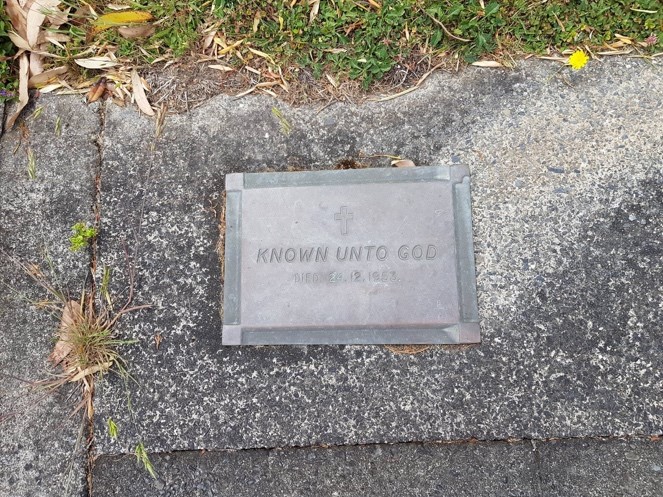
The body of Jack, aged 11, was never formally identified. He is commemorated on the mass Waitangi grave at Karori, where his name is engraved on the memorial along with those of his parents and brothers. It is possible he may have been one of the bodies interred without being known, who are memorialized with a plaque saying ‘Known Unto God’.
By Ruth Leach
[1] https://nzhistory.govt.nz/media/sound/sound-prime-minister-sidney-holland-tangiwai-disaster
[2] https://teara.govt.nz/en/community-contribution/9323/whangaehu-river-mouth