Update: A Leap Forward
Exciting news on the Karori Chinese Marker project – planning is underway for the launch of our website 我們是誰 Who we are.
Our project volunteers say ‘preserve this history before it is removed by the weather, earthquakes and/or a lack of knowledge or care’.
More early settler Chinese burials than the original 88 identified were found in Karori Cemetery Public 2, and with the addition of Bolton Street and Matiu/Somes Island cemeteries, the burials in our launch will number 112 persons.
The marker images and biographical stories of these settlers are at completion; some have informative stories, others reveal little more than the formal burial, but collectively they record a window to the community’s cultural history prior to 1941 and can be searched based on a New Zealand locality or a Guangdong, China, place of origin.
我們是誰 Who we are has been created with Chinese Poll Tax Heritage Trust funding and is designed for content from throughout New Zealand. With your help information and comment can be added using the entry portal.
We wish to hear from anyone willing to locate and document early Chinese markers in a local New Zealand cemetery. Our email contact is karorichinesemarkers@gmail.com
Ally McBride
August 2026
Introduction
In the late 19th and early 20th centuries, young men left their homes in Guangdong, China, and sailed to New Zealand. Over time, many became shopkeepers, merchants, laundrymen, gardeners, and labourers.
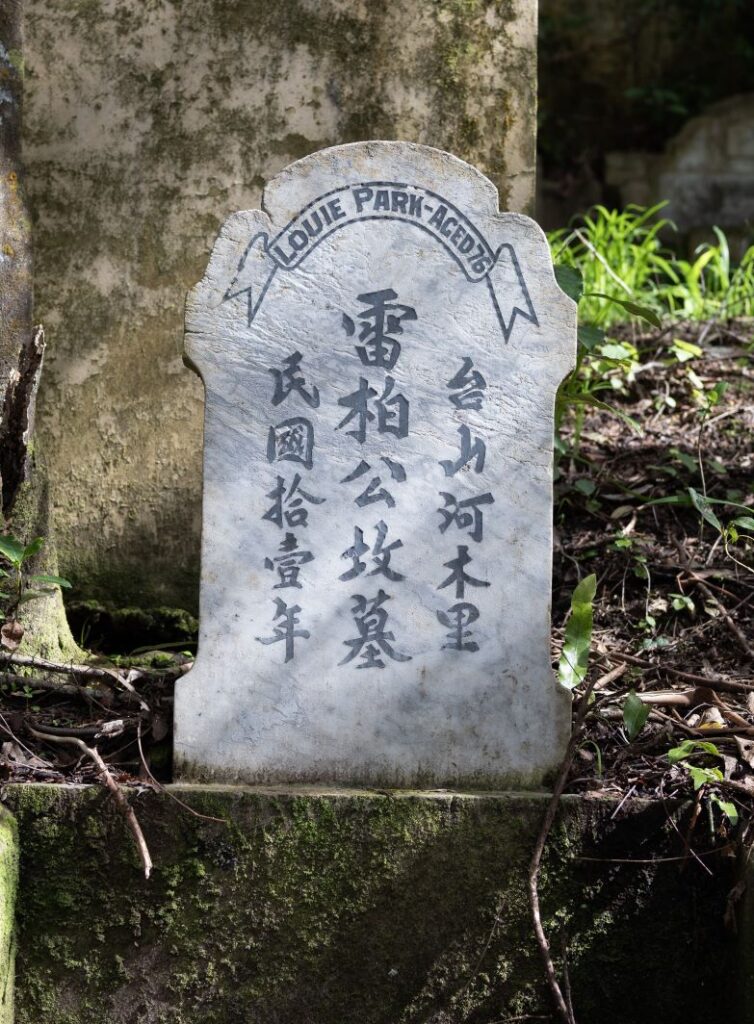
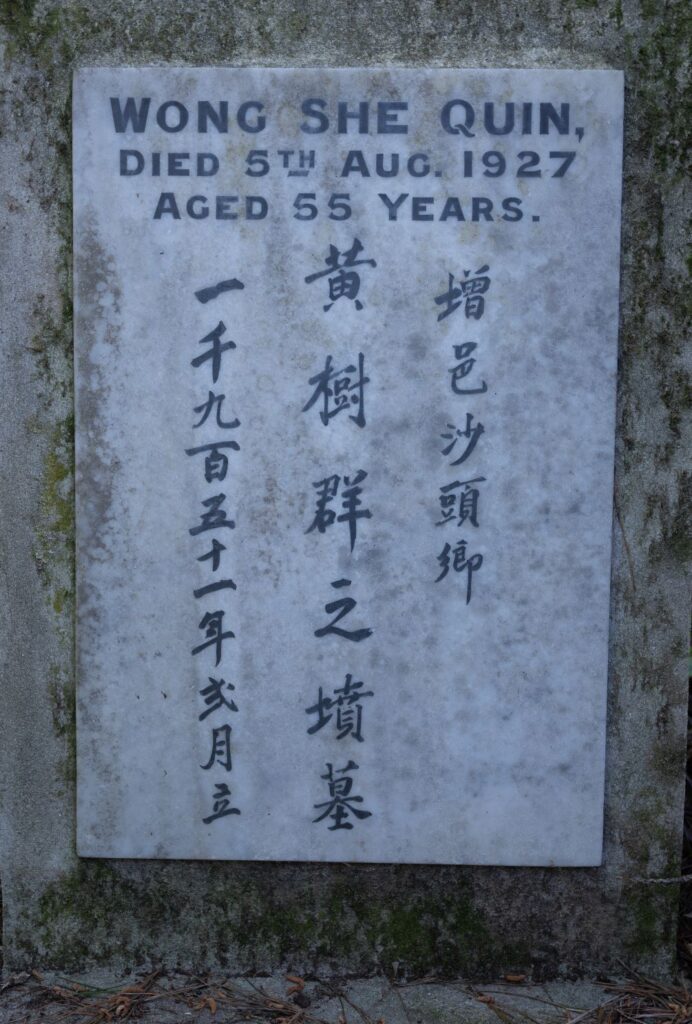
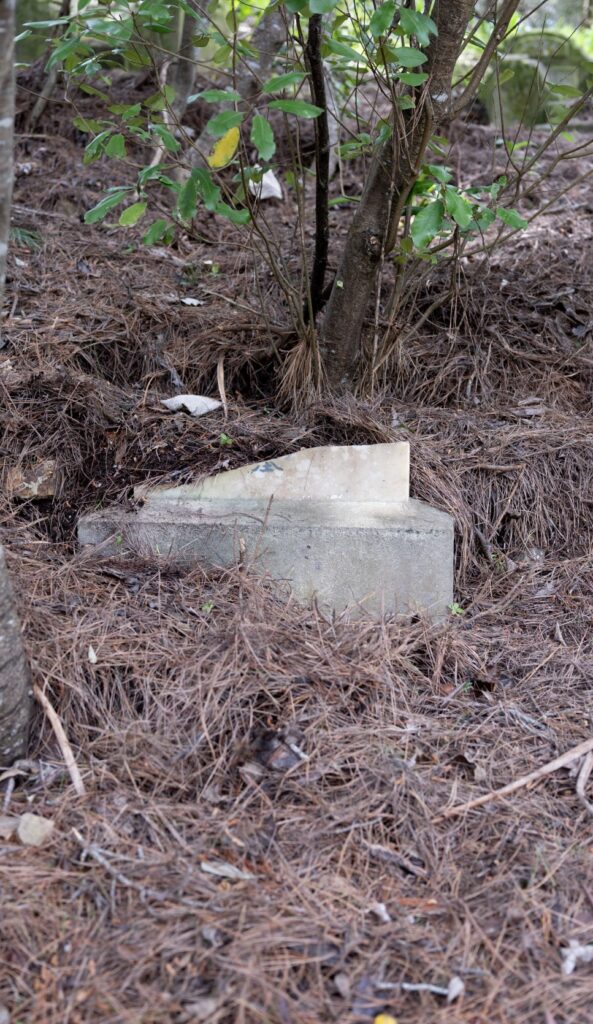
The Karori Chinese Marker Project aims to identify and honour 88 Chinese burials in the Public 2 section of Karori Cemetery—resting places that have long been forgotten beneath gum trees, with grave markers inscribed in Chinese characters, a language few can read today.
In a poignant turn of history, those once overlooked are now inspiring a new generation of volunteers to rediscover and share their stories.
Most of the individuals buried here lived in Wellington’s former Chinatown, centred around Haining Street, where they formed a close-knit community. Others came from small towns or rural areas, often to visit family or receive care at Wellington Hospital.
The initial phases of the project—locating, clearing, cleaning, mapping, and photographing the grave markers—are well underway. Ally McBride, a Friends of Karori Cemetery volunteer, is leading efforts to weed the plots and clean the marble markers. Final photographs will be captured soon.
Translation of the traditional Chinese inscriptions into English, as well as Mandarin and Cantonese romanisation, is currently in progress, requiring expert linguistic and cultural knowledge. Alongside this, biographical research is being carried out to document the lives of those buried.
An open-source website is being planned, which will allow the public to explore the history of these early Chinese settlers and locate their burial sites within Karori Cemetery.
This important work has been made possible through the generous support of the Chinese Poll Tax Heritage Trust.
Ally McBride
August 2025
See also this Guide to Reading Chinese New Zealand Headstones prepared by Nigel Murphy.