We are often asked about the various symbols on headstones. Committee member, Sue Guest, has collated the following information and photos using examples from Karori Cemetery. We will continue to add to this as we undertake more research.
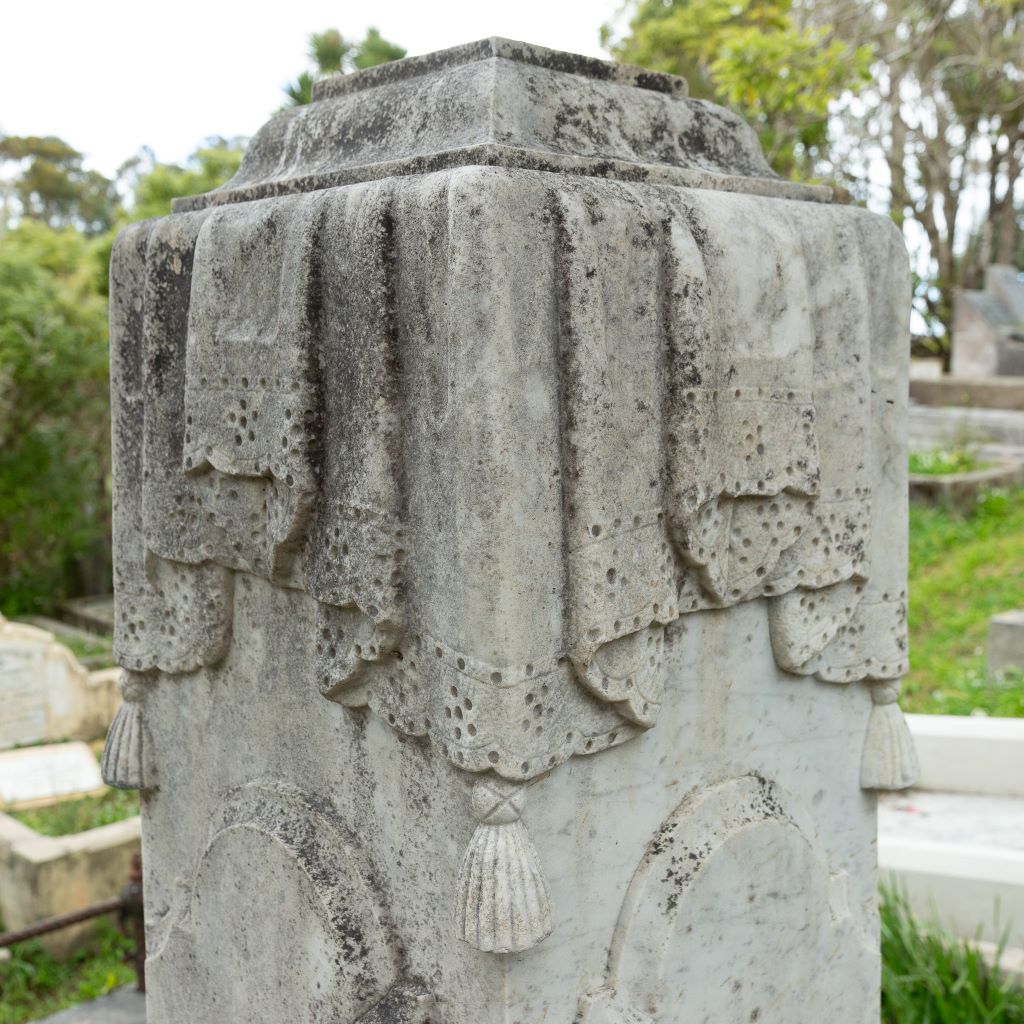
The Pall
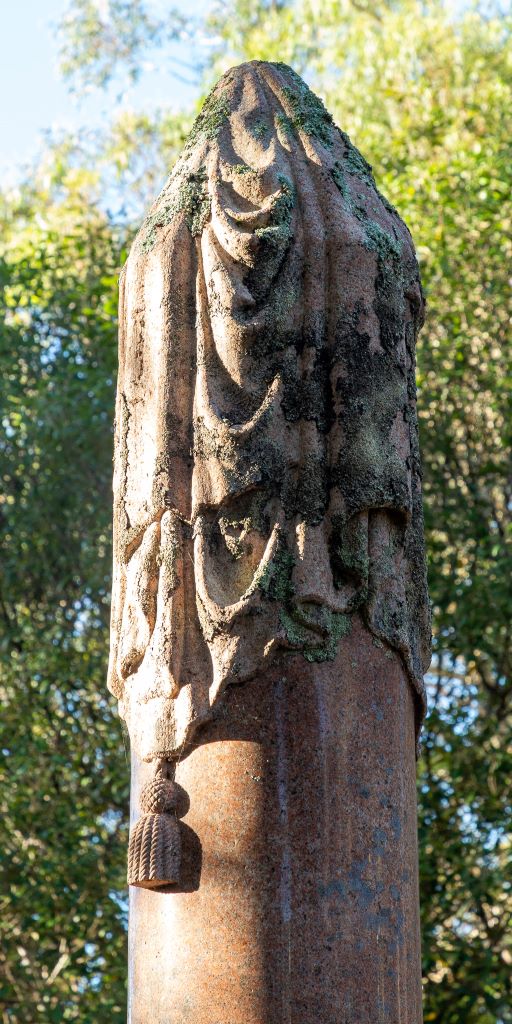
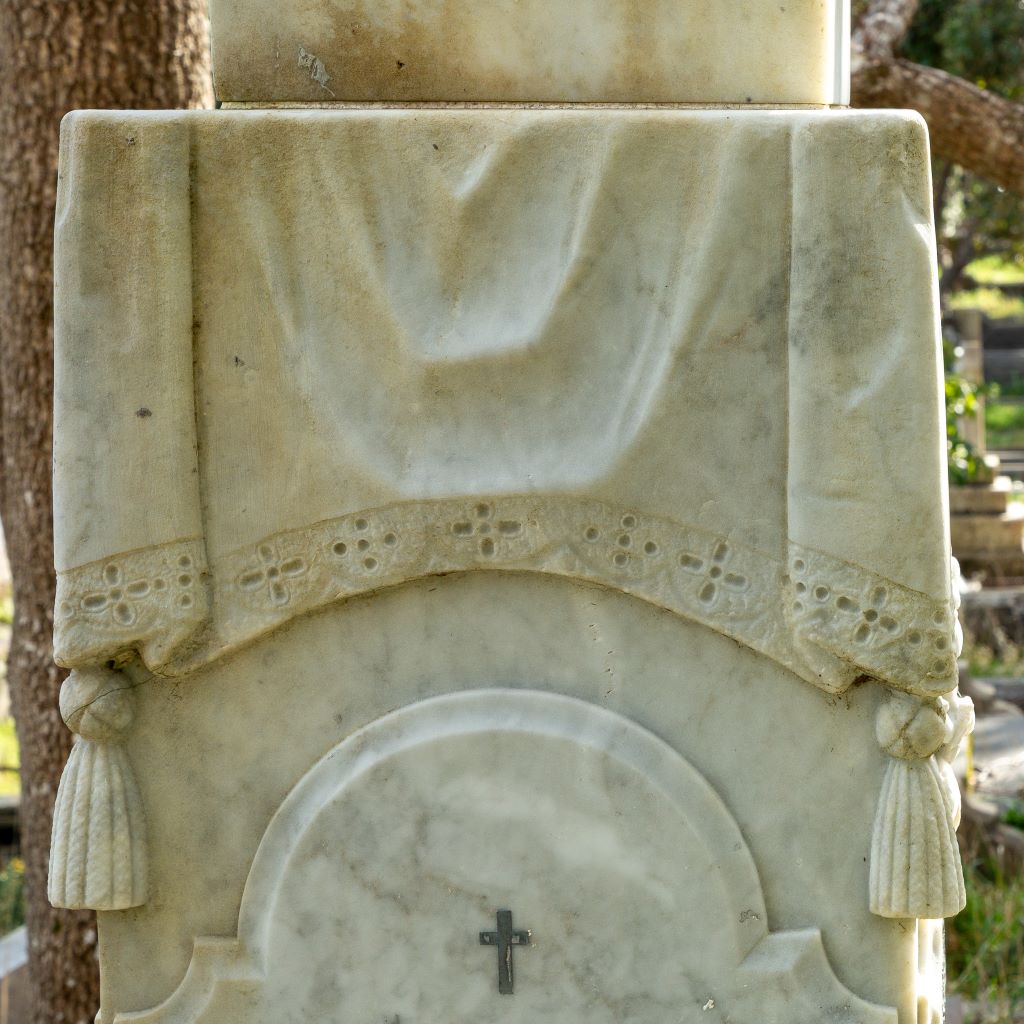
Some headstones are partly covered with a heavy cloth called a pall that has a decorative border and usually has tassels on the corner. Palls tend to be draped on columns or pedestals and are symbolic of the large cloth that was used to cover a coffin.
Palls are not so common in New Zealand funerals now. The term “pallbearer” is still commonly used for the people who carry the coffin.
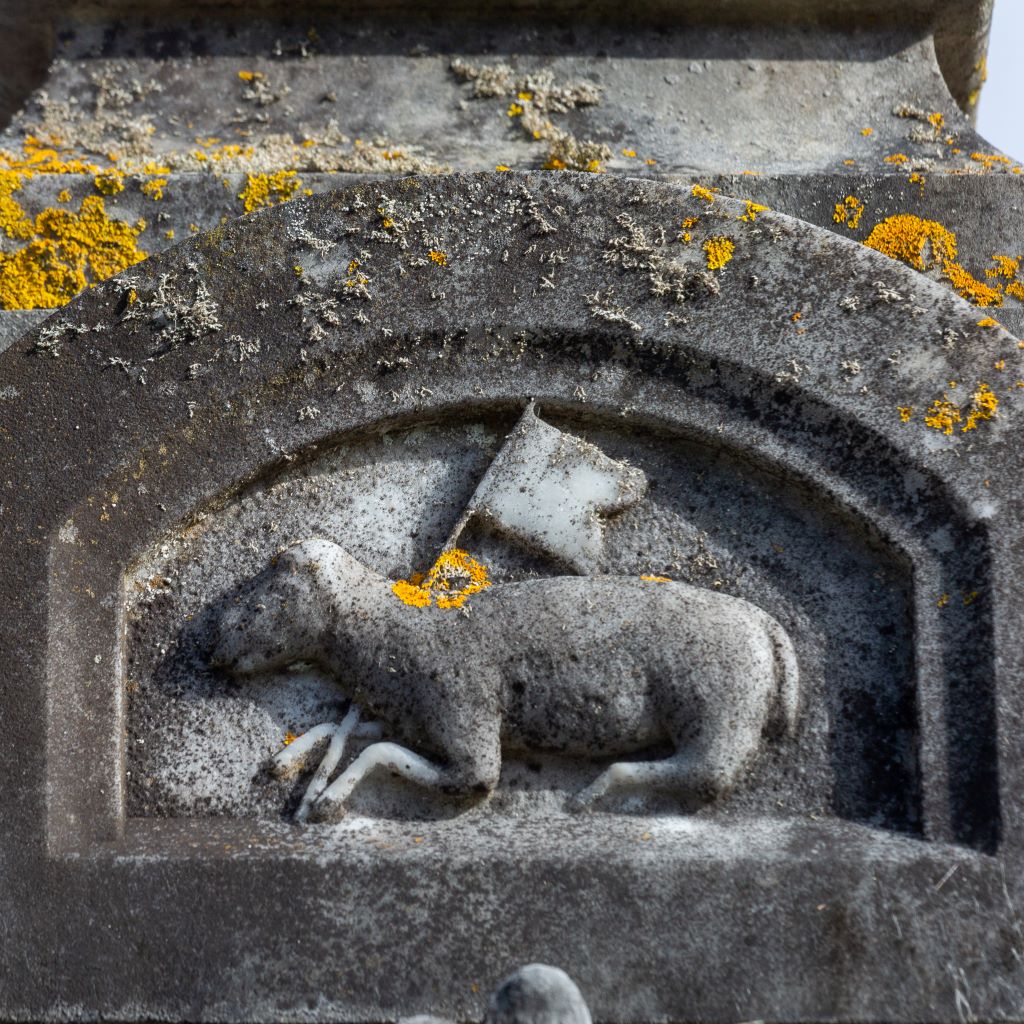
Lamb of God
The Lamb of God is a symbol for Jesus. Here the lamb is shown with a flag or standard. These were carried into battle. Therefore this symbolises the resurrection and the promise of life after death.
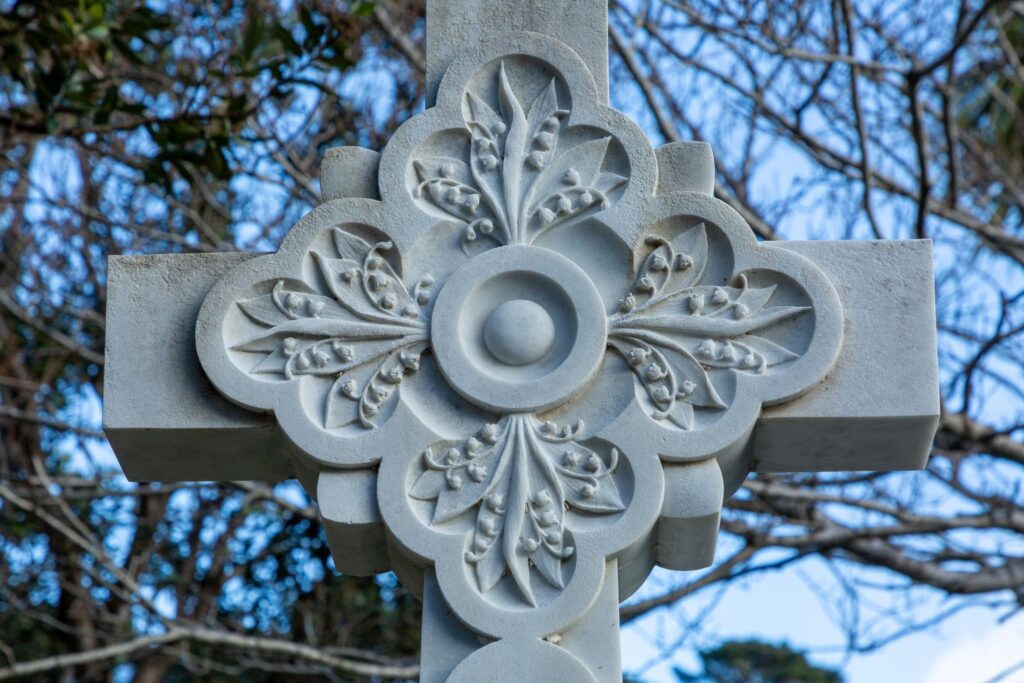
Lily of the Valley
Lily of the Valley, with its beautiful perfume, is one of the first flowers in spring. It symbolises renewal and resurrection and purity and humility.
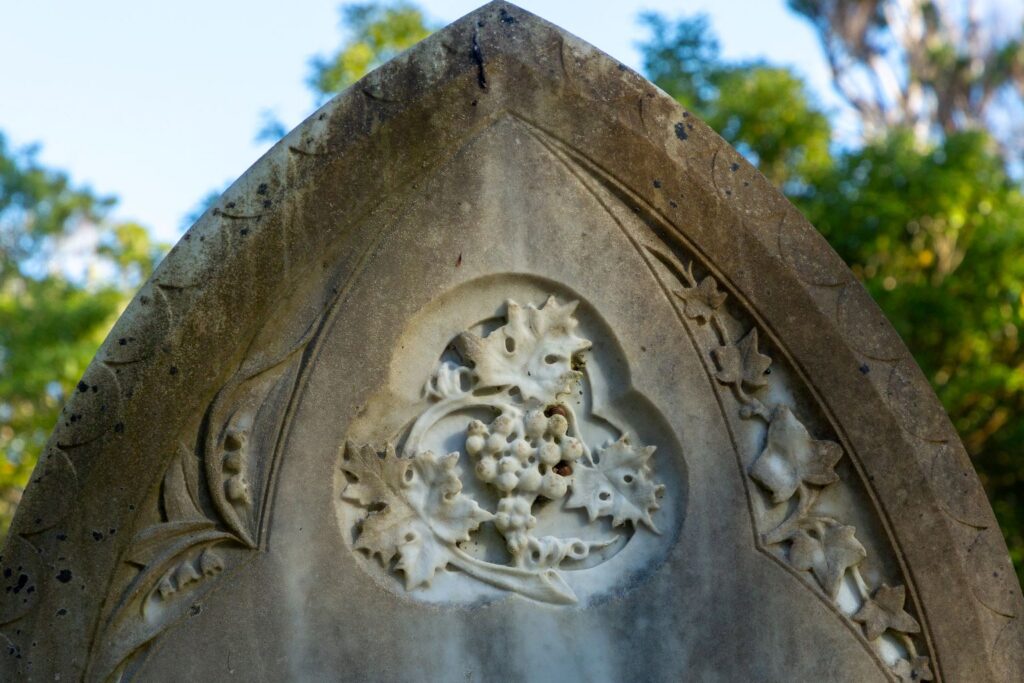
Grape Leaves
The grape leaves and fruit on a headstone are symbols of the fruits of the kingdom of heaven the deceased is enjoying. The grape vine is set within a trefoil. These three semi circles are a Christian symbol representing the Trinity of God the Father, His Son Jesus and the Holy Spirit. The motifs on either side are the Lily of the Valley and Ivy
Empty Shoes
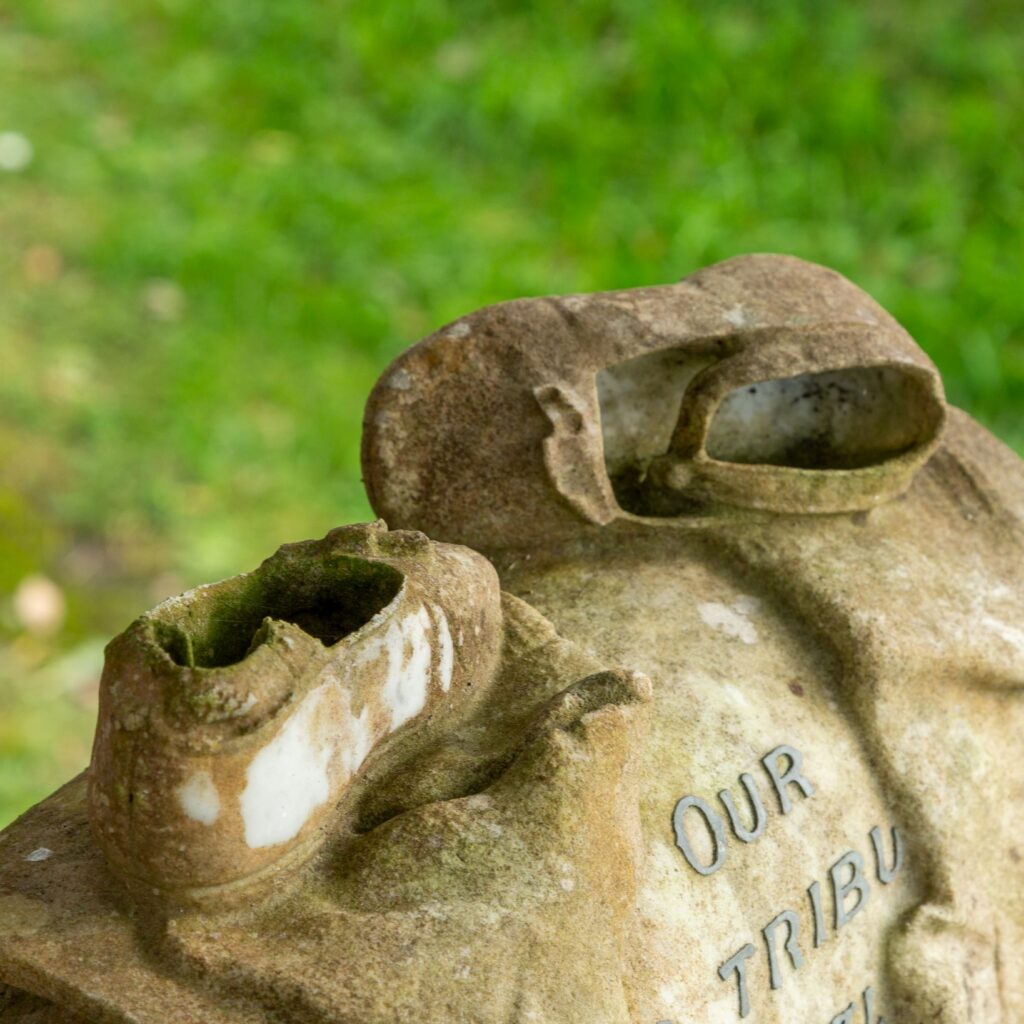
The empty shoes, with one lying on its side symbolises the death of a child. These old fashioned shoes with the little button fastening seem particularly relatable. This family grave has two children; Graham aged 19 months who died in 1893 and little Alex aged 8 months who died in 1900. The inscription on the headstone is “Better a child in God’s great house than the King of all the earth”.
Convolvulus
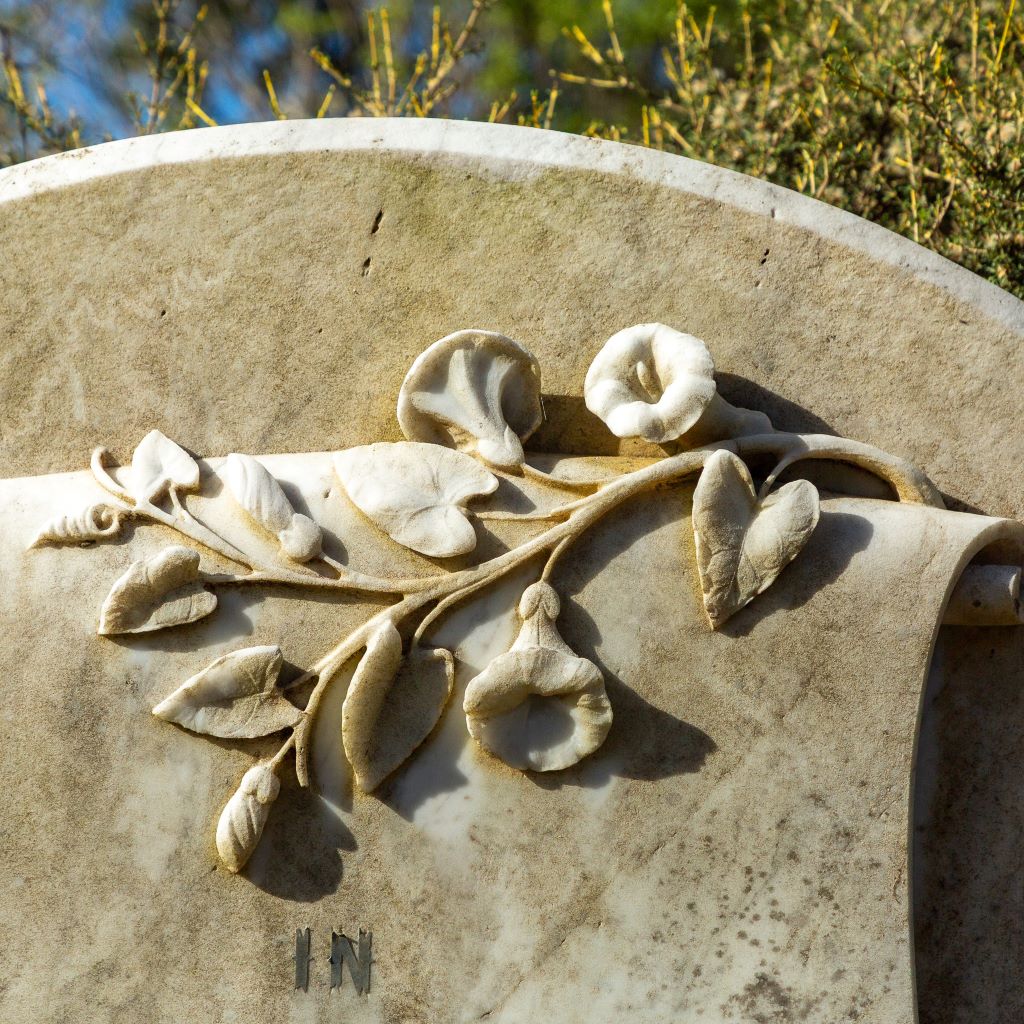
Convolvulus, sometimes called bindweed, entwines itself around a support and is a symbol of attachment and affection. The flower closes at night and opens again in the morning and is also symbolic of the resurrection, youth, the bonds of love and the brevity of life. Although a weed in New Zealand, the vine, like ivy, is a common motif on headstones.
Dove and Olive Branches
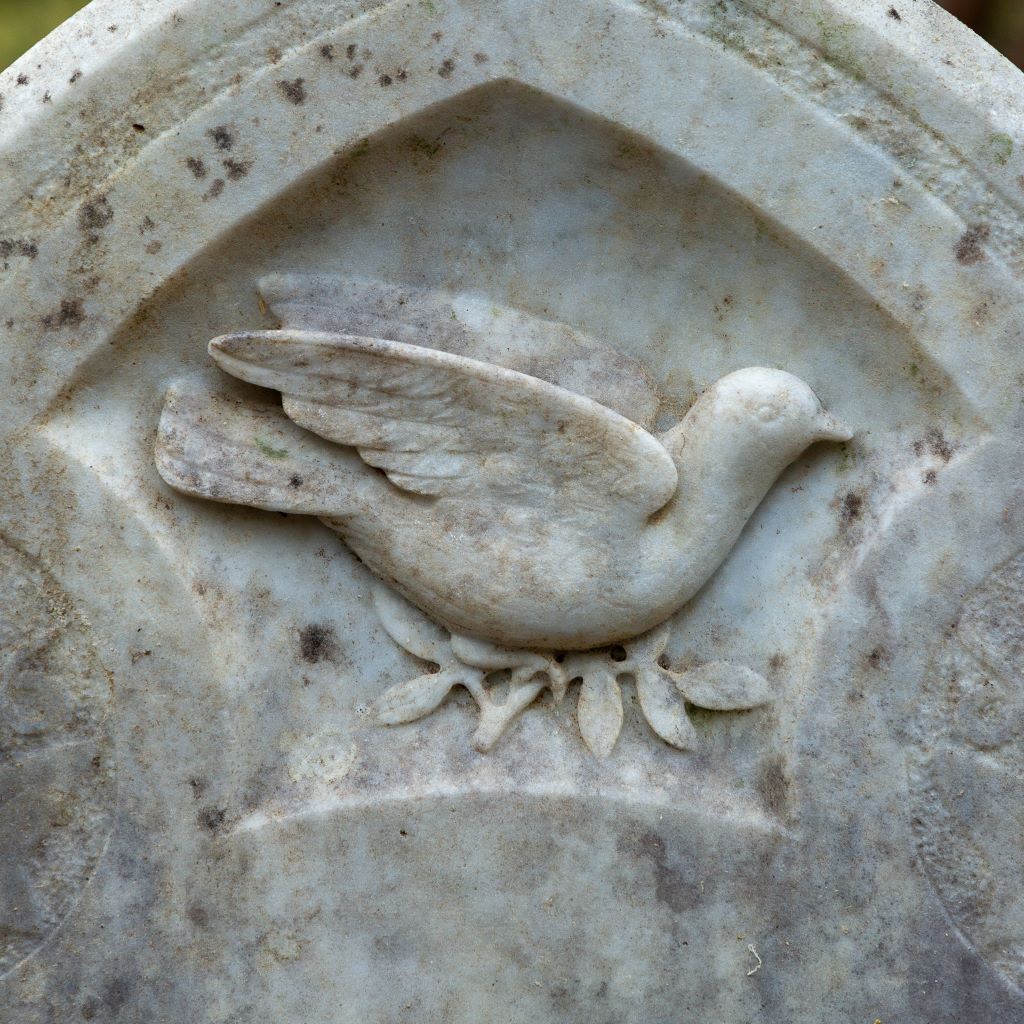
In the Biblical story of Noah’s Ark, after the flood subsides a dove is sent out and returns with an olive leaf signalling that life was returning. This headstone shows the dove with the olive twig in its claw.
Many of the doves in the cemetery are on top of headstones. The marble has been damaged by the passing of time and often becomes discoloured.
The dove is a symbol of purity and peace and also a symbol of the holy spirit.
The Anchor
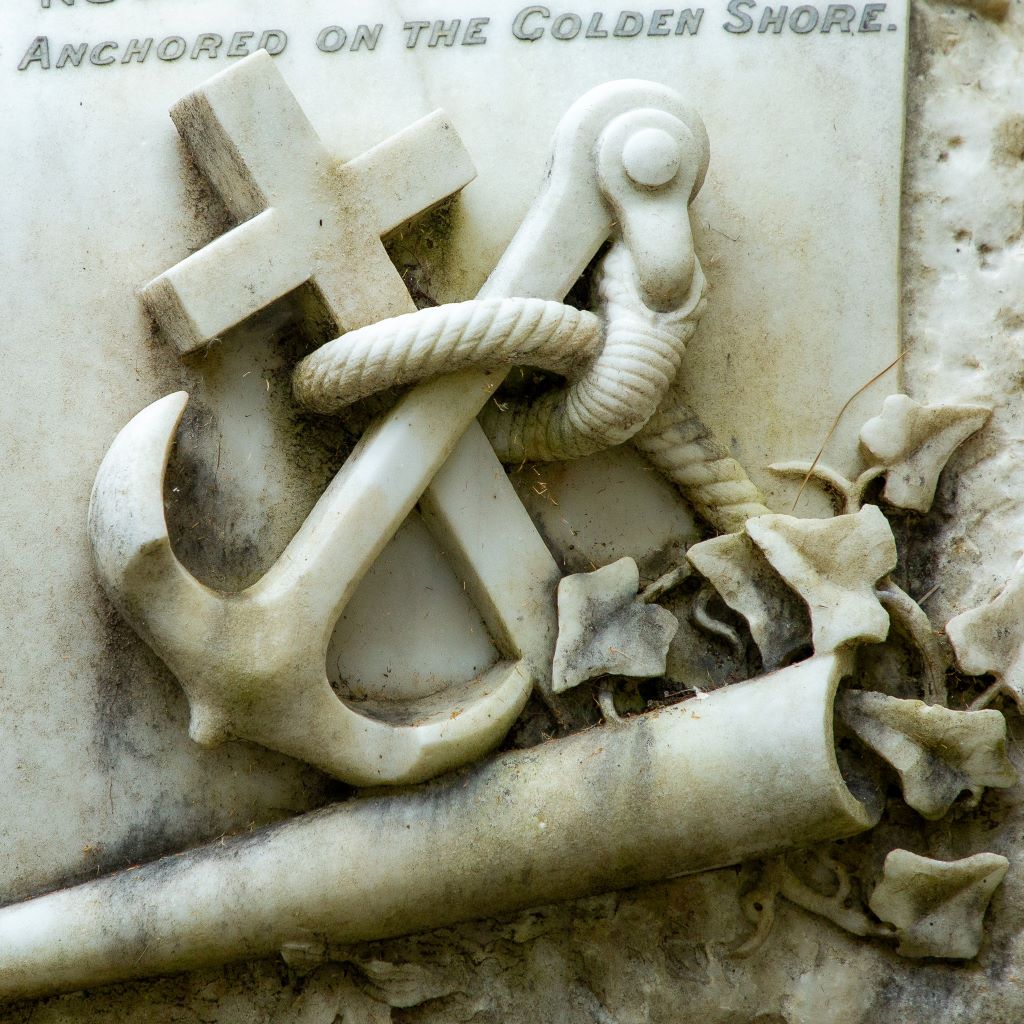
The Anchor is often found on the graves of seafarers. There are a number of graves in Karori that have anchors on them that are clearly those of seafarers. In this case the deceased is a young woman. Her husband was a second mate on a steamship.
Anchors are symbolic of holding a ship steady and in stormy weather. The wording “anchored on the golden shore” is visible. Often the anchor is also shown with a cross symbolising both the promise of the resurrection and the faith based upon it.
Ivy is a symbol of immortality and fidelity.
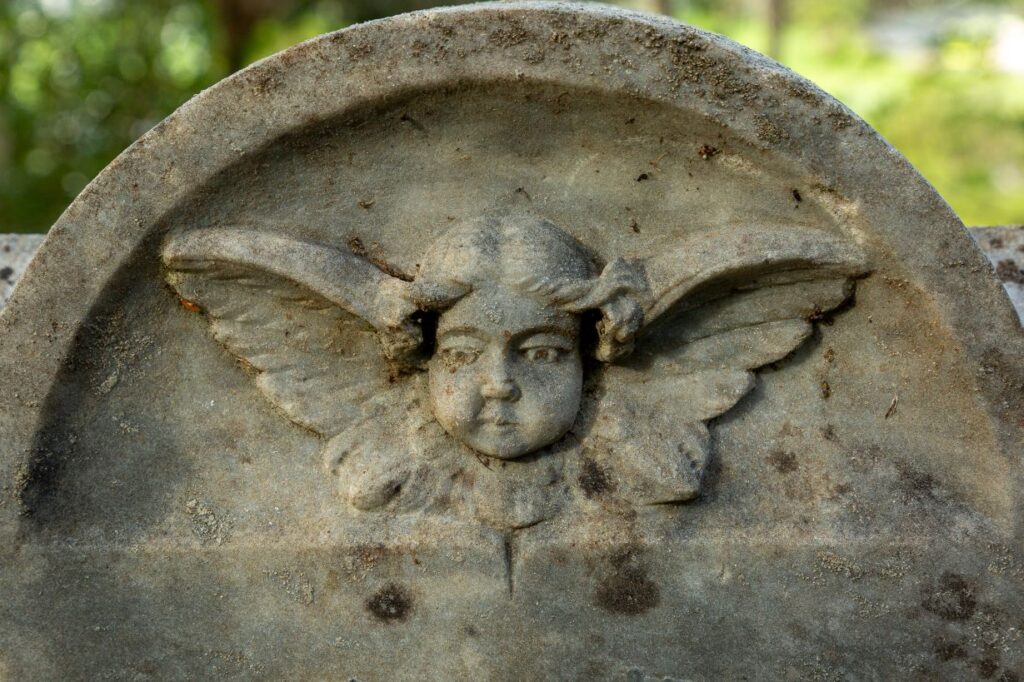
Death’s Head/Cherub
The skull and crossbones symbolised death on tombs in the 17th century in Britain. This then developed into a skull with wings which symbolised the fleeting nature of life. By the 19th century the skull had become a human face.
Faith
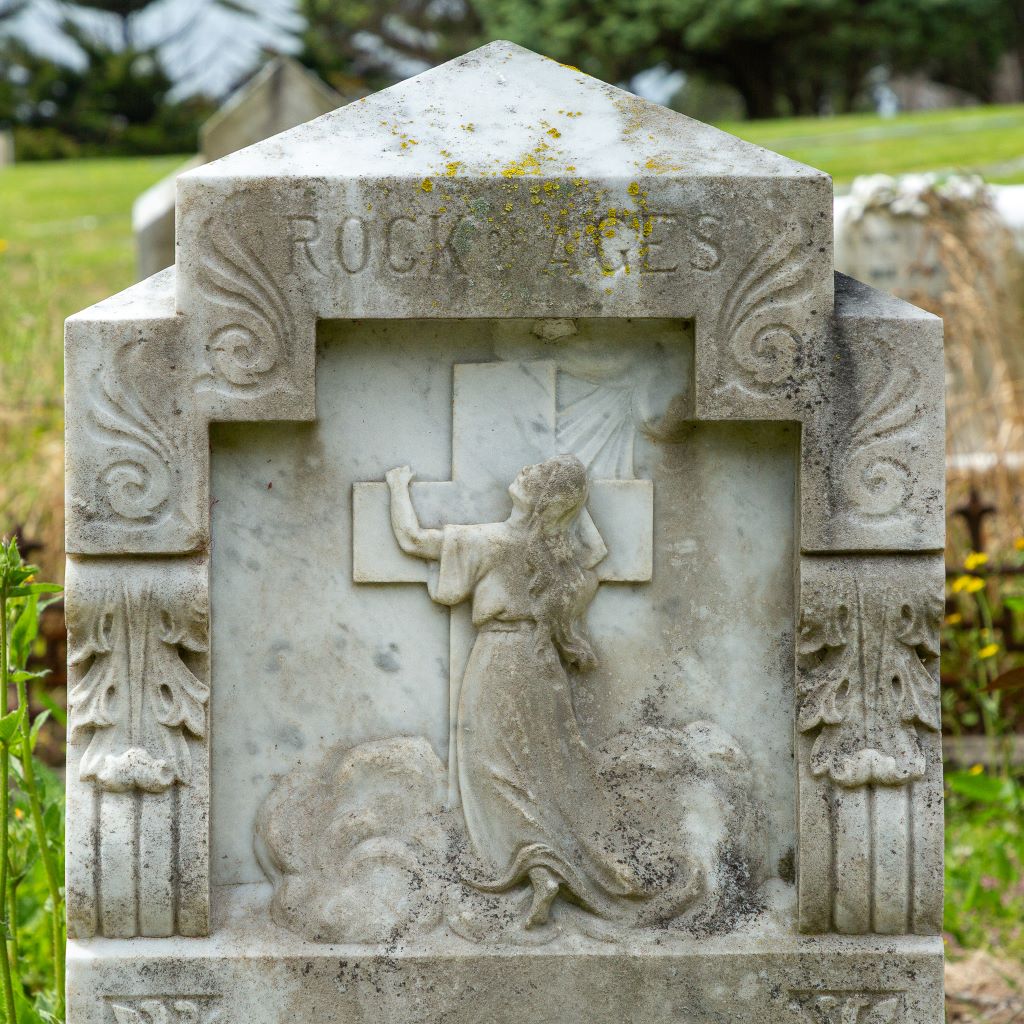
One of the Christian virtues was faith. This is represented in Cemetery art by a woman clinging to a cross. This cross is on stoney ground. The inscription is “Rock of Ages” which refers to God and is the first line of an old hymn. This headstone also has acanthus leaves on each side. These are often seen in classical architecture.
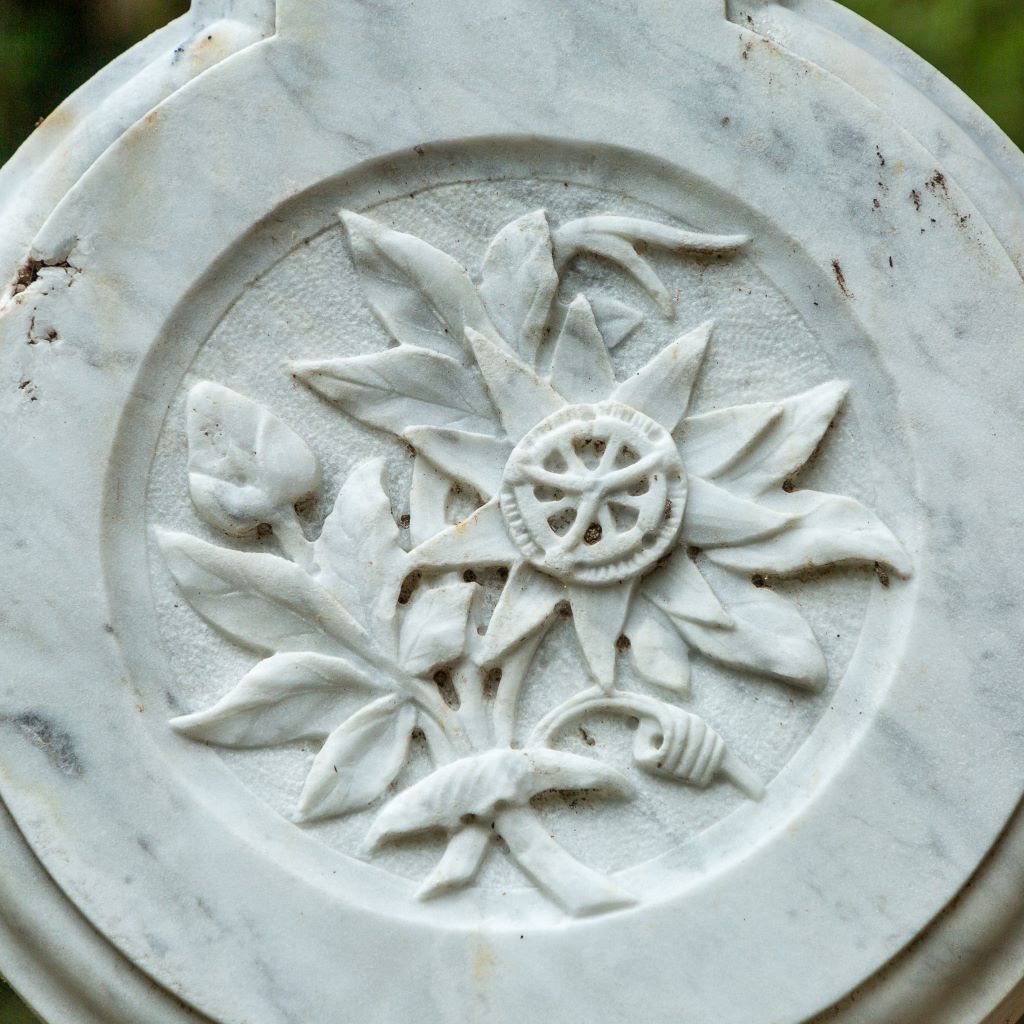
Why are there Passionfruit vines on the Headstone?
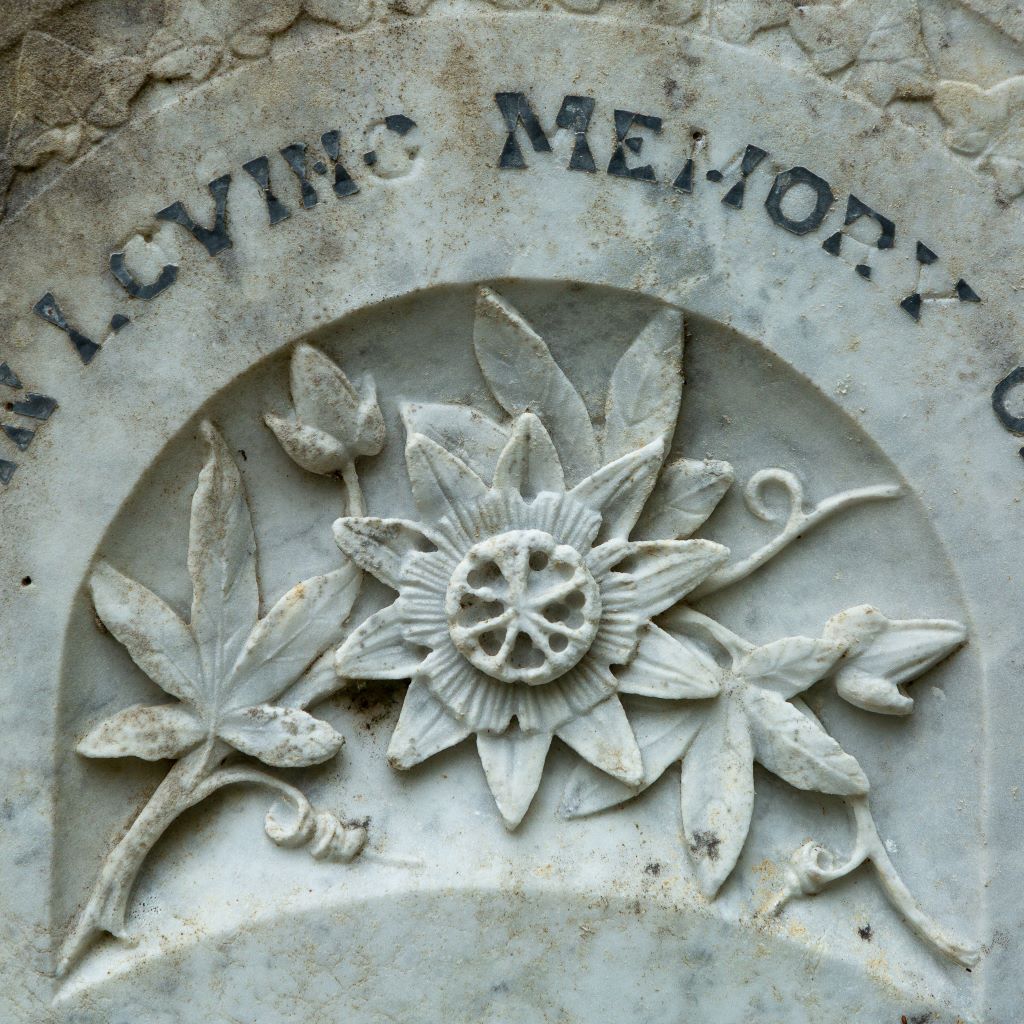
The passionfruit flower and vine appear on some headstones. This is not a plant that is mentioned in the Bible. The genus of plants, now named Passiflora, is mainly from South America.
The term “Passion” refers to the suffering of Christ from the Last Supper to his death on the Cross. The Spanish missionaries in South America used the complex feature of the flower of the Passion fruit to explain the elements of the crucifixion story. Hence the name of the plant with the belief that Christ, through his suffering was sent to save us.
New Zealand does have one native Passiflora, the Kōhia which grows in Otari. The Banana Passionfruit, which is also found in the bush around Wellington is a weed which will smother native plants.
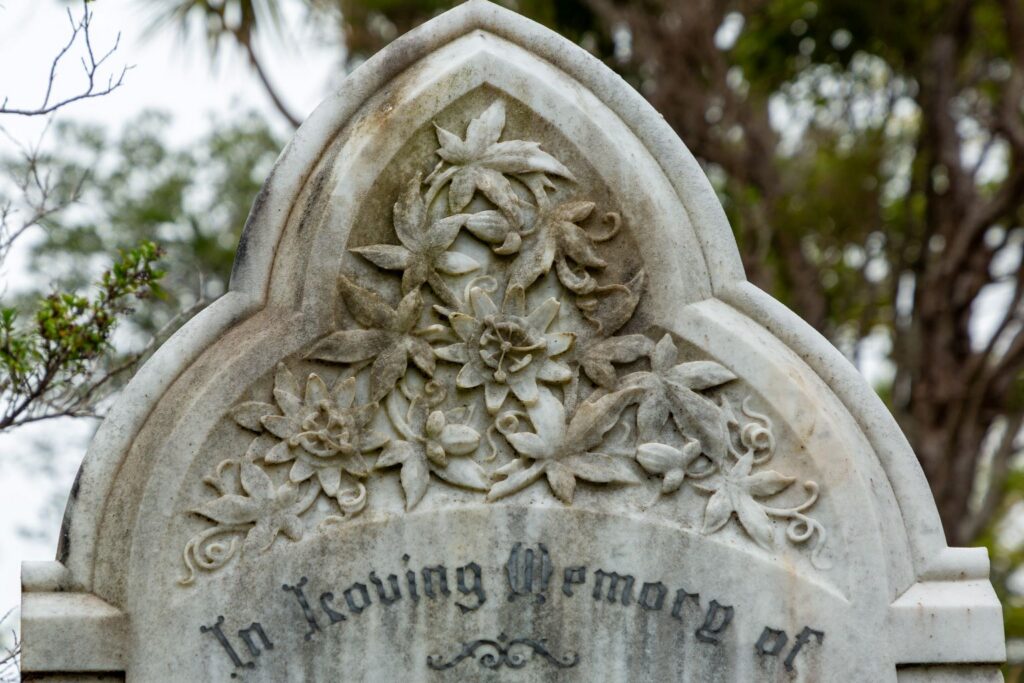
(Eleanor is the name on the headstone but Helnor Jane WATERS is the name in the cemetery record)
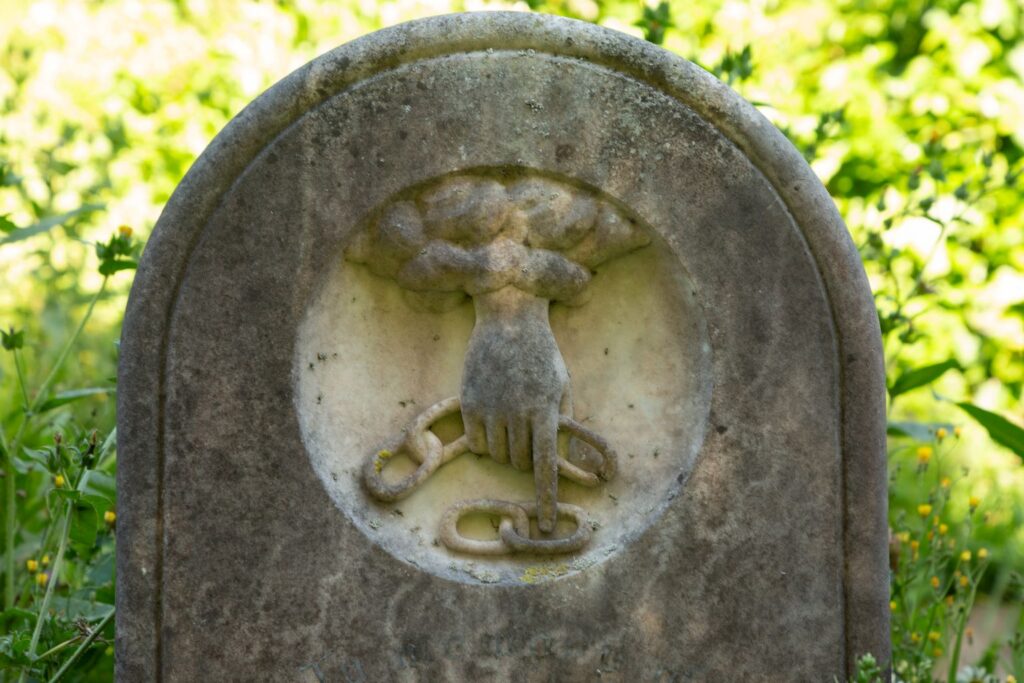
Hand of God
An ancient way of representing God is to show a hand. On this headstone the hand is coming out of the cloud that surrounds the wrist. The index finger is reaching down to a broken chain. This is a symbol of the ties that bind a family which have been broken and will be established when they meet in Heaven. This grave includes Hiram Hart who died aged 33 and his mother who died aged 87.
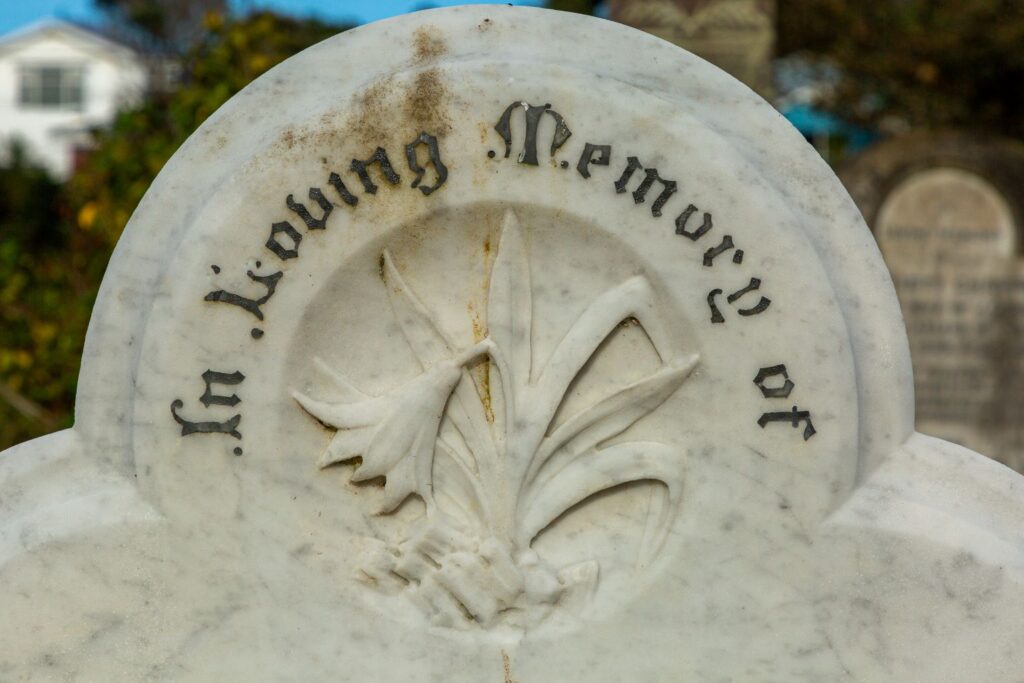
Broken Flower
Flowers are common symbols on headstones but sometimes they are broken. A lily which was the traditional Victorian flower of death and mourning. The broken stem is often symbolic of a life cut short. In this case it is Frederick Roberts who died at the age of 21.
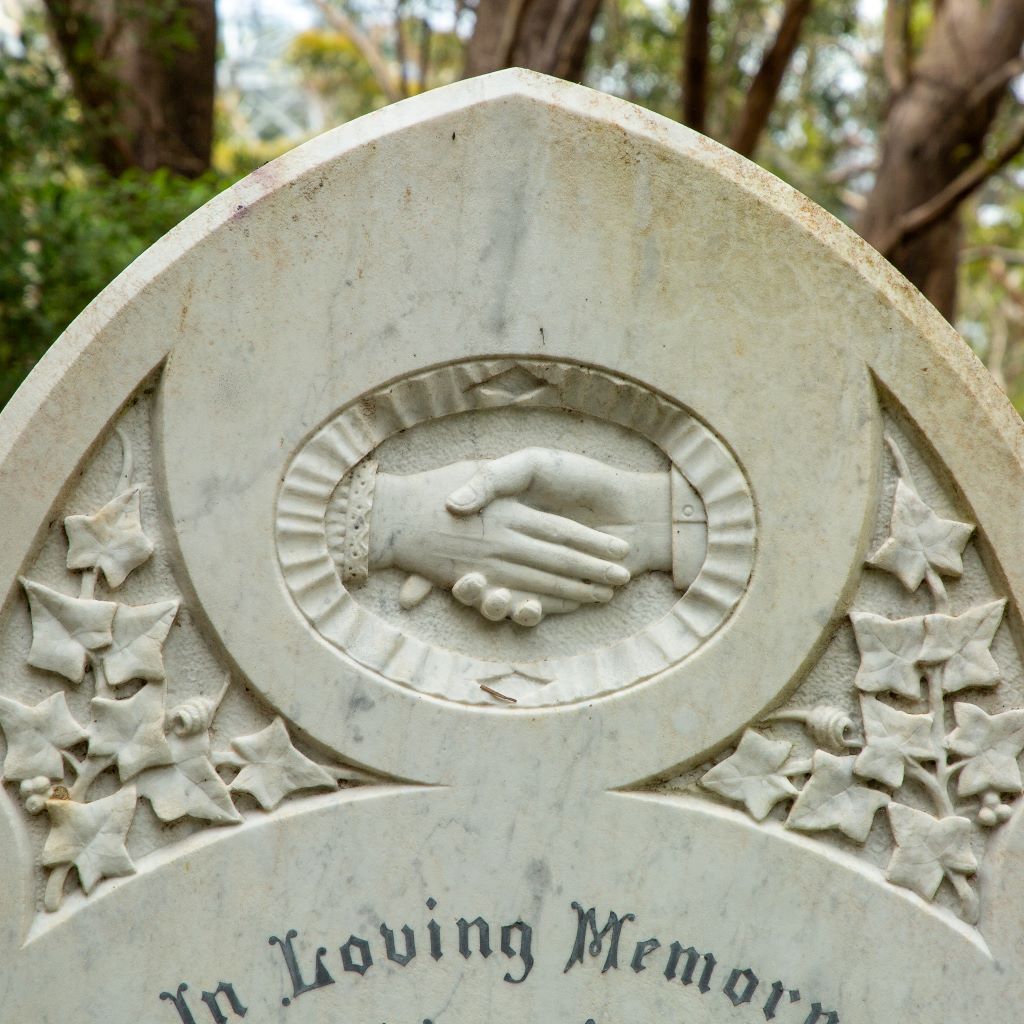
Clasped Hands
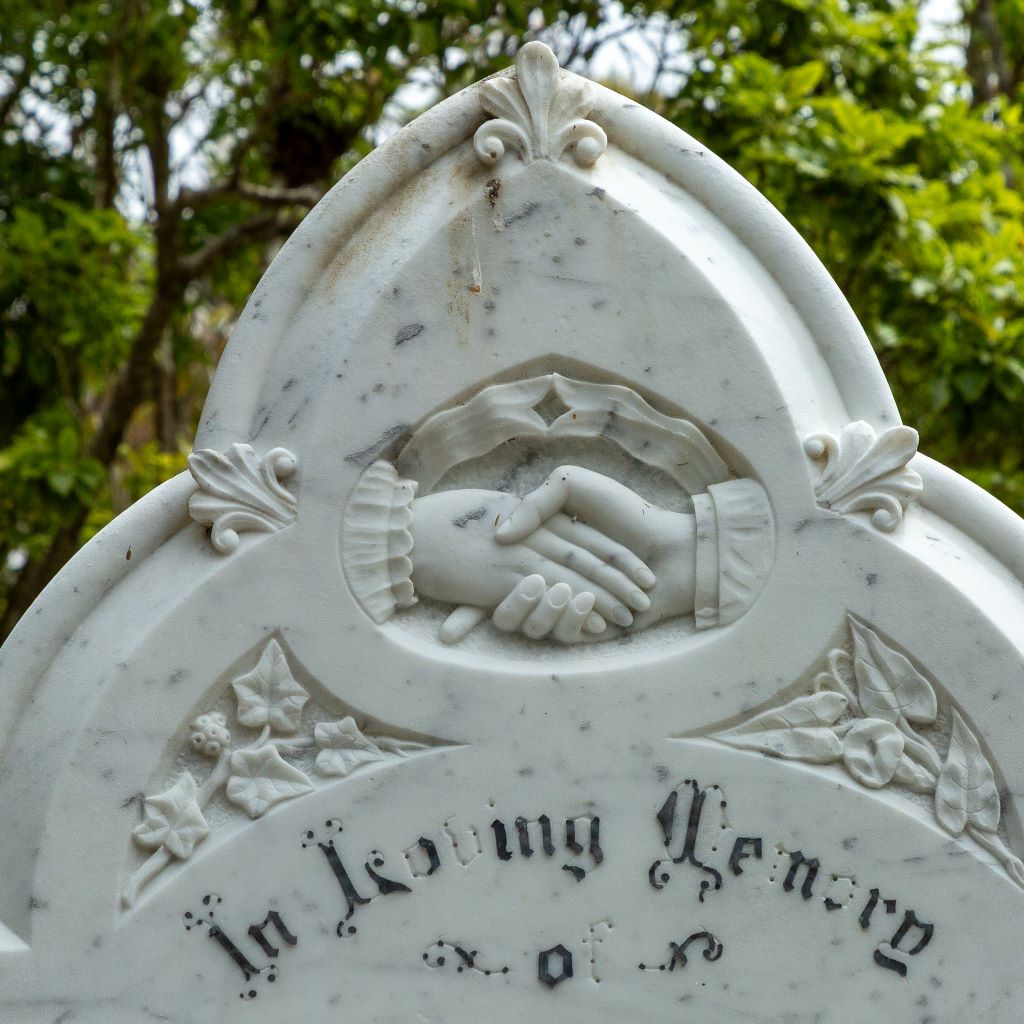
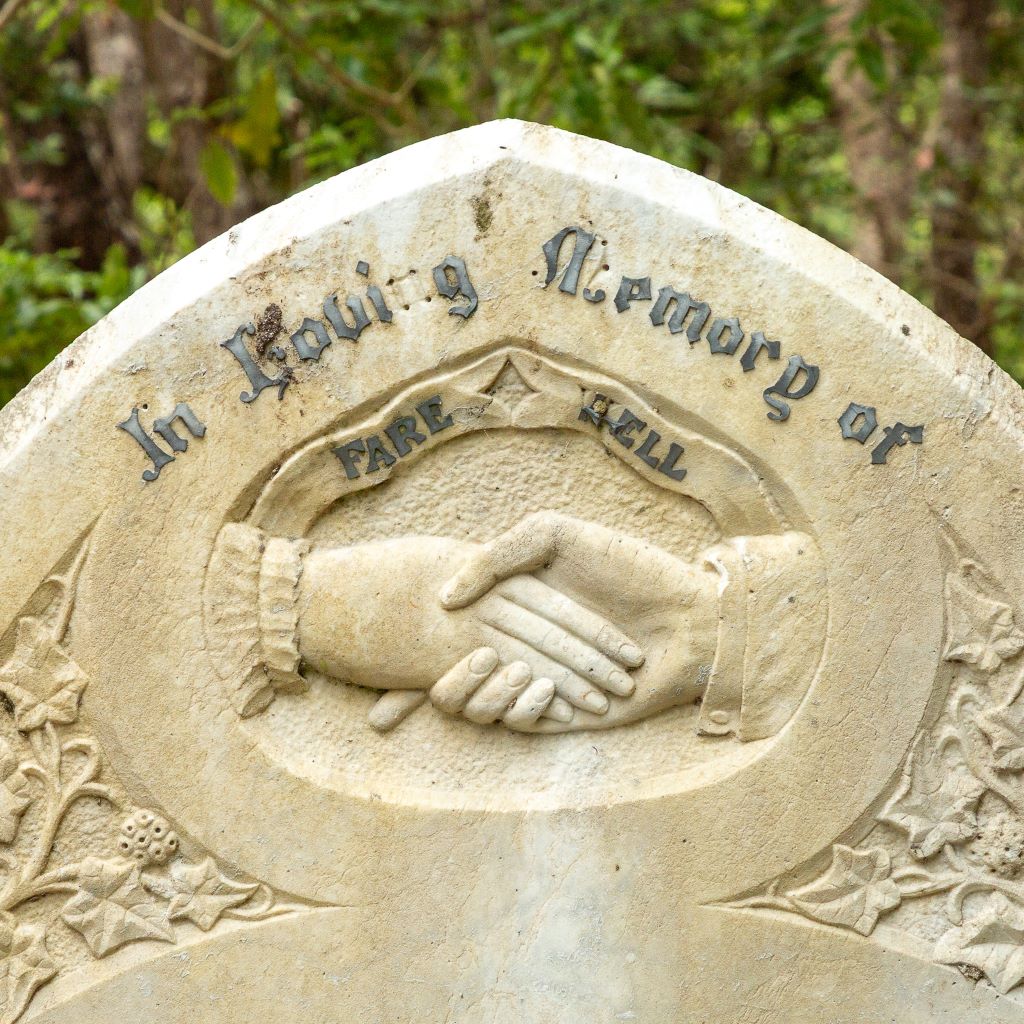
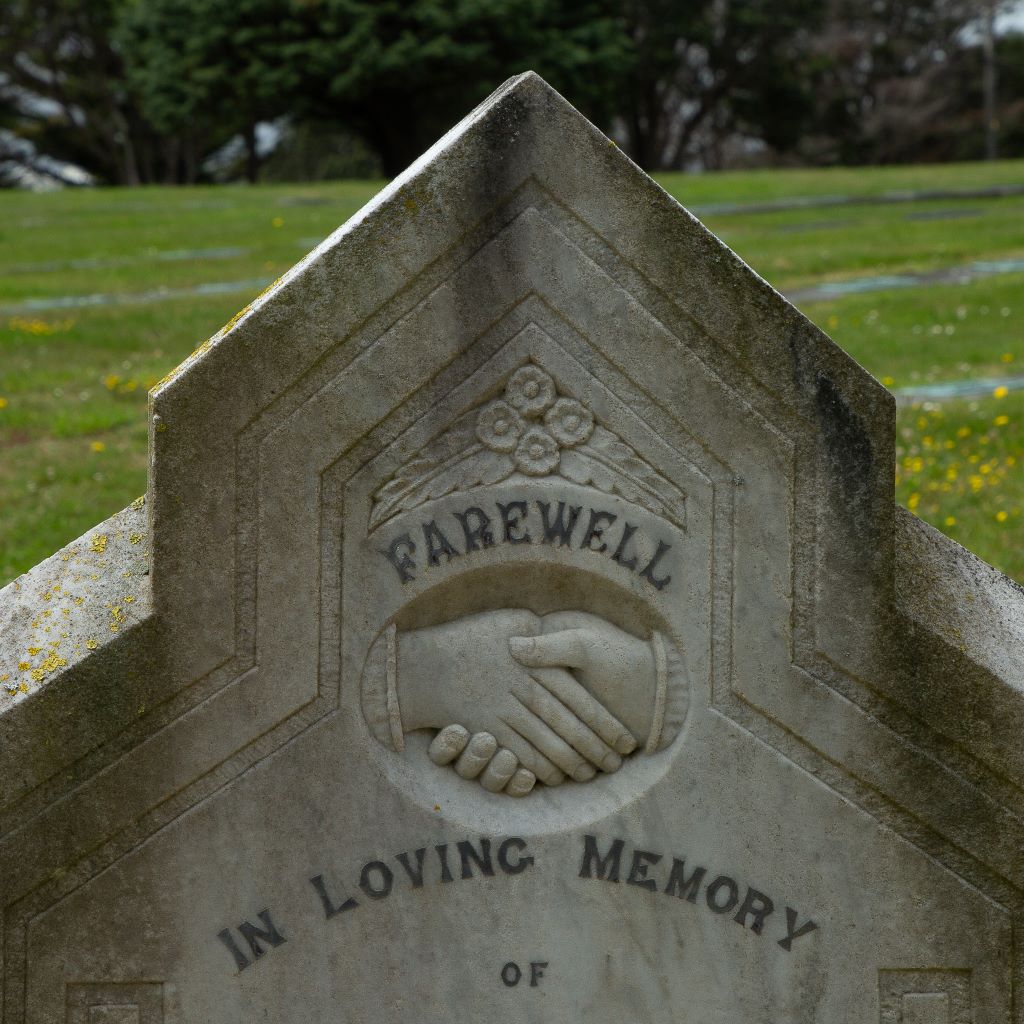
A common symbol on headstones in Karori cemetery is that of clasped hands. These represent the hands of the living and the deceased clasped in farewell. In Karori they often appear on headstones for married couples.
By convention the hand of the woman is on the left and the man on the right. The woman usually has a lace cuff and the man a shirt sleeve. The man’s index figure often points downwards.
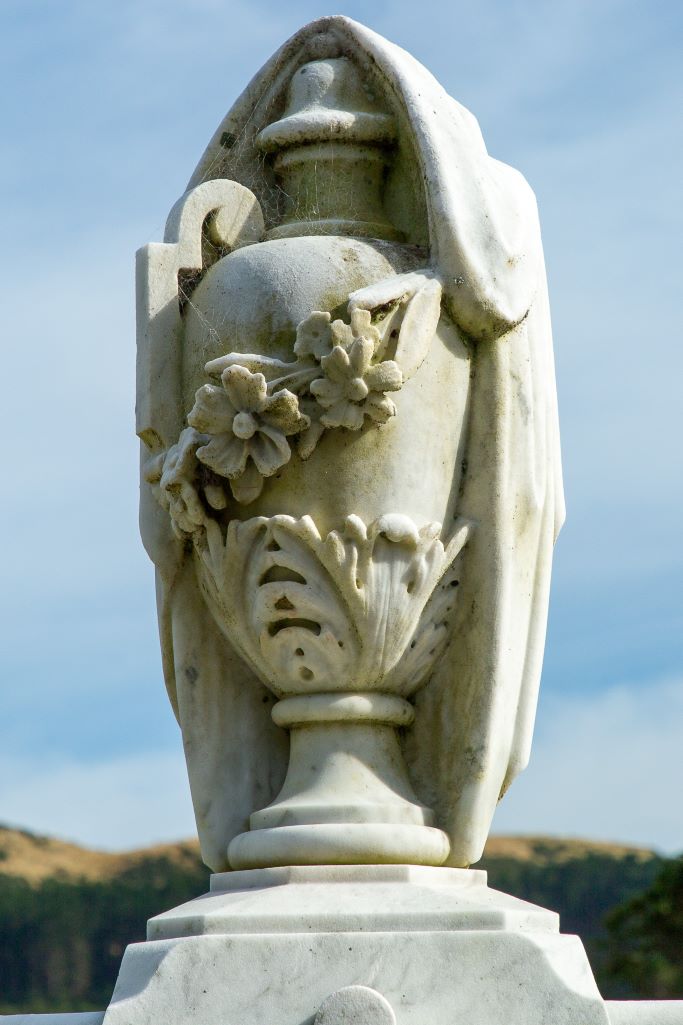
Draped Urns
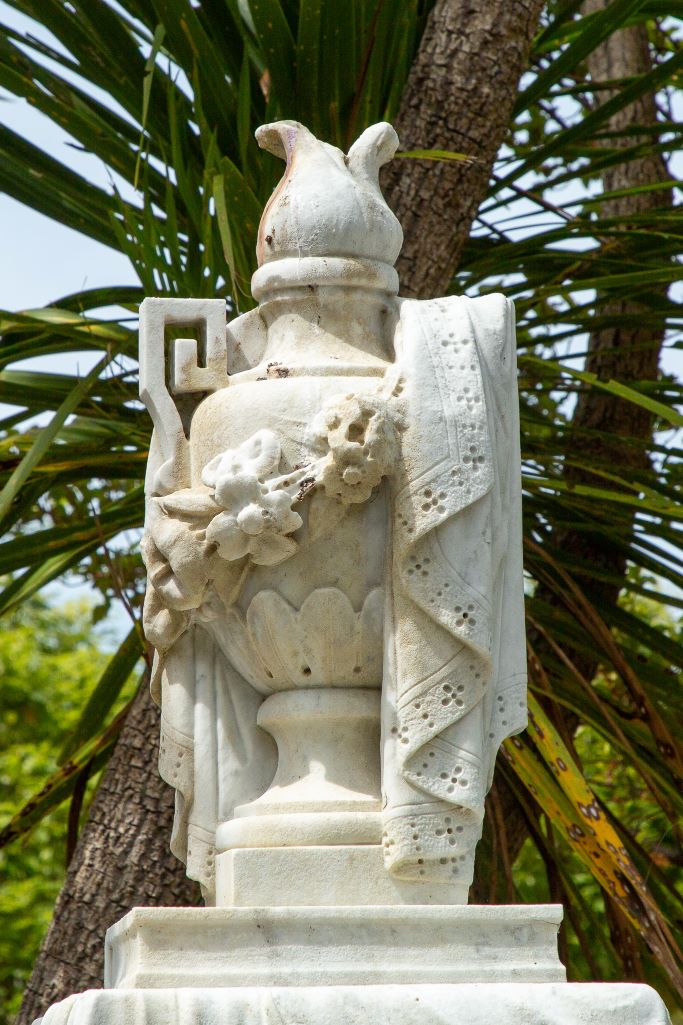
Draped Urns are quite a visible symbol in Karori Cemetery. The urn is taken from the classical Greek imaginary. They are a symbol of fate or the lottery of life.
Headstones in Karori vary. They may include a garland of flowers. Often, they are draped with a veil which symbolises the journey from life to death.
Some urns have flames coming out of top showing new life associated with death.
The Dove of Peace and the Gates of Heaven
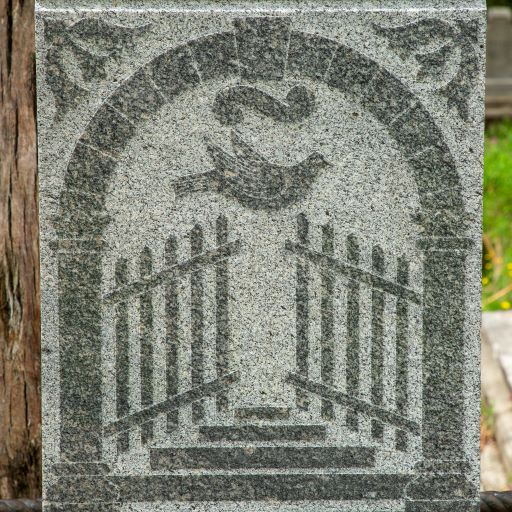
Some headstones have strong Christian symbolism. This one concerns the promise of life after death. This headstone has an arch and an open gate representing the Gates of Heaven. It depicts the soul of the deceased passing through the gates to eternal life. The dove of peace also represents the soul leaving for heaven.