1887-1950
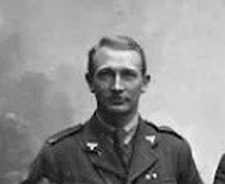
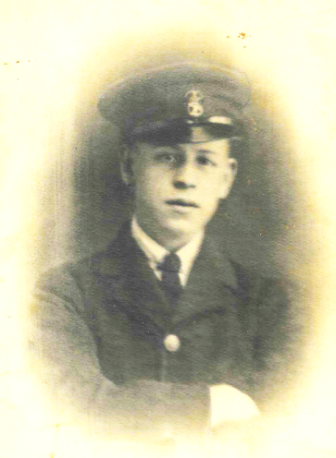
Edwin was born in Wilson’s Street, Lyttelton on May 20th 1887. He was the first son and third child
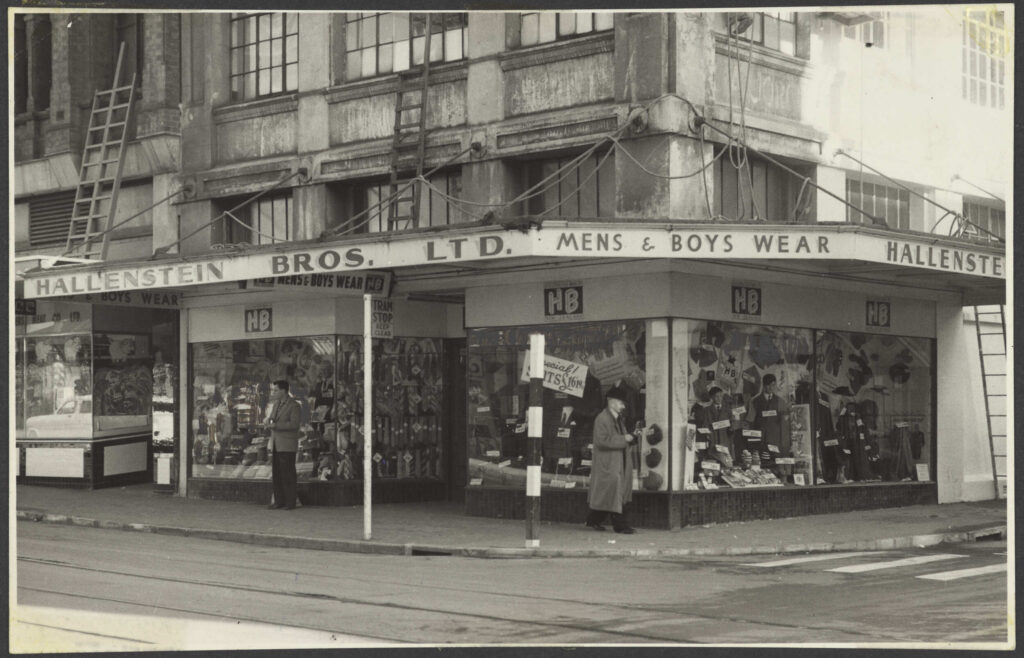
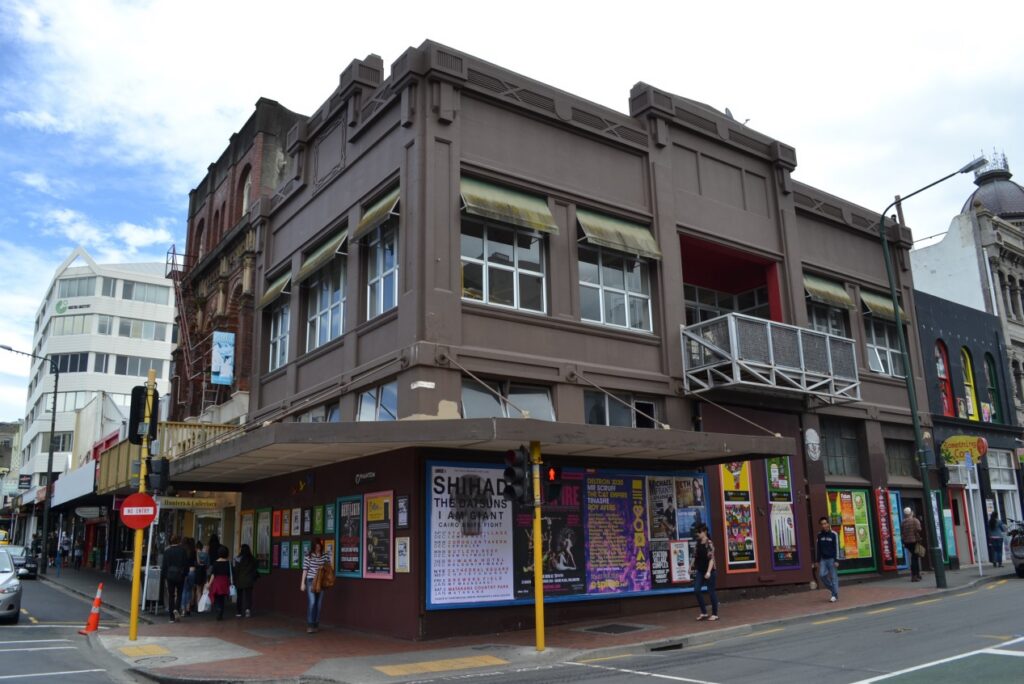
of Alban and Agnes Wells. Edwin chose a career in architecture commencing his training under the tutelage of Mr Alfred Henry Hart (better known as AH Hart) an early and well respected architect in Christchurch. With the sudden death of Mr Hart in 1908 Edwin then continued his training under Australian architects the Luttrell brothers – Alfred Edgar and his younger brother Edward Sydney – who had established a business after moving to Christchurch from Tasmania in 1902. Edwin moved to Wellington for a time in the early 1900’s where he worked for Penty & Blake and Chrichton & Mackay both highly regarded architectural firms in the capital before moving variously to work in Gisborne, Timaru and then back to Christchurch.
Following the outbreak of World War One Edwin enlisted for active service in October 1914 and on May 18th 1915, not long before his 28th birthday, he joined the Otago Mounted Rifles with the rank of 2nd Lieutenant following a qualifying exam to become a commissioned officer. Before he achieved this rank he is listed in his file as being a Sergeant and then a Sergeant Major. The Otago Mounted Rifles became part of the 6th Reinforcements, D Squad, of the New Zealand Expeditionary Force and on August 4th 1915 along with 2,362 troops and other personnel Edwin was dispatched to Egypt on board the HMNZT “Tofua” arriving in Suez on September 19th. The Otago Mounted were then sent to France where in July 1916 they were merged with squadrons from the 4th Australian Light Horse to form the 2nd ANZAC Mounted Regiment and posted to the Western Front. Throughout late 1916 the 2nd ANZAC Mounted was primarily engaged in duties behind the front lines including traffic control and patrolling in both France and Belgium.
On April 4th 1917 Edwin was promoted to the rank of full Lieutenant and by June 7th 1917, along with his squadron, he was facing the Messines-Wytschaete Ridge in Flanders, Belgium, preparing for the commencement of a meticulously planned British assault on the German lines. At 3:10 am on that day a series of 19 underground mines (huge stacks of high explosives tunneled under the German lines by specialized allied tunnelers) were exploded within seconds of each other creating complete chaos and destruction in the German lines. Taking advantage of the confusion caused by the mines Edwin led a small group of his men on horseback into the enemy lines ahead of advancing British infantry and behind a rolling artillery barrage. It is for this action, and his courage in protecting the lives of his men, that he was awarded the Military Cross. After a variety of different duties including a period with the army’s “School of Instruction” which was overhauling training methods to combat the tactical challenges learned since the Somme Offensive.
On January 29th 1918 Edwin was seconded to British Special Operations and dispatched on board the ship “Viper” to Basra in British-occupied Mesopotamia (Iraq). On arrival Edwin was seconded, with the rank of captain, to the special operations force known as Dunsterforce, a secret British military mission led by Major-General Lionel Dunsterville. It was tasked with securing oil-rich Baku in the Azerbaijan Democratic Republic, blocking Turkish and German expansion in the area and organizing local resistance groups. While a tactical failure Dunsterforce did succeed in occupying and holding Baku for six weeks which benefited British interests in the Middle East and India. It is considered to be the forerunner of various special operations forces including the Long Range Desert Group of World War Two and today’s Special Air Service units.
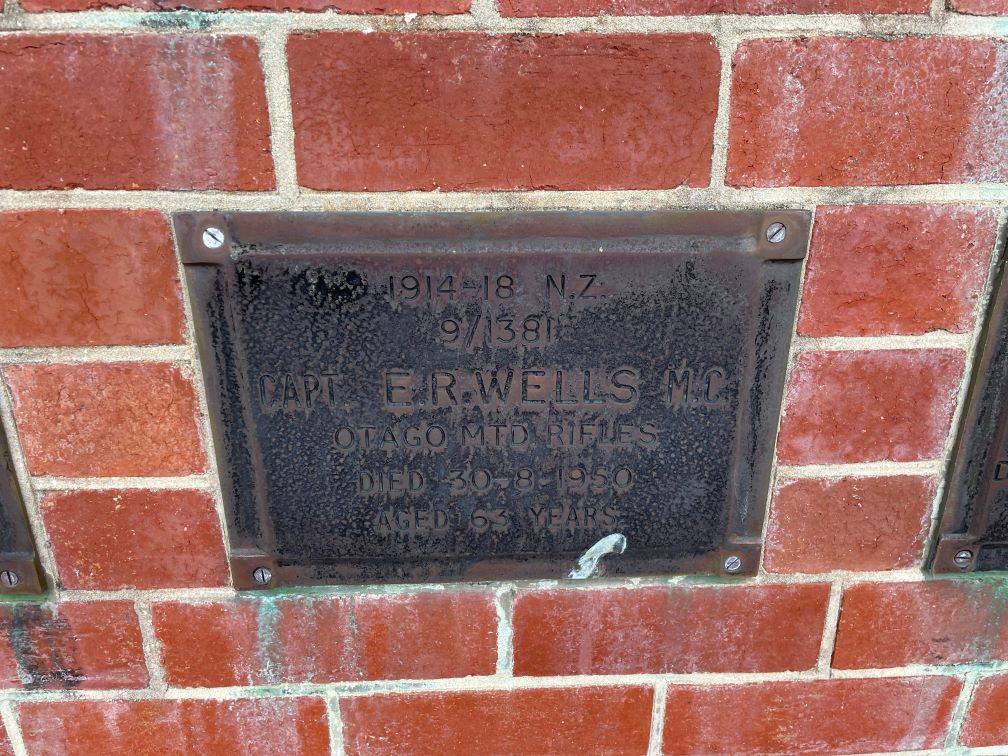
After serving his country overseas for 3 years and 239 days Edwin returned home on board the troop carrier “Devon” which arrived in Lyttelton Harbour on June 3rd 1919. He served for a short time in the New Zealand Territorial Forces until 1920 when he married Catherine Lynette Mackenzie at Saint Michael’s Anglican Church in Kelburn, Wellington and started his own architecture company. During World War Two he served with the Home Guard from 1942 to 1943 and died at the young age of 63 years in August 1950. Edwin Royden Wells MC is interred in the columbarian wall at the rear of the Karori Cemetery Services section. Lest We Forget.
Plot: Soldiers Niche/DIV C1 /34
By Peter Wells